
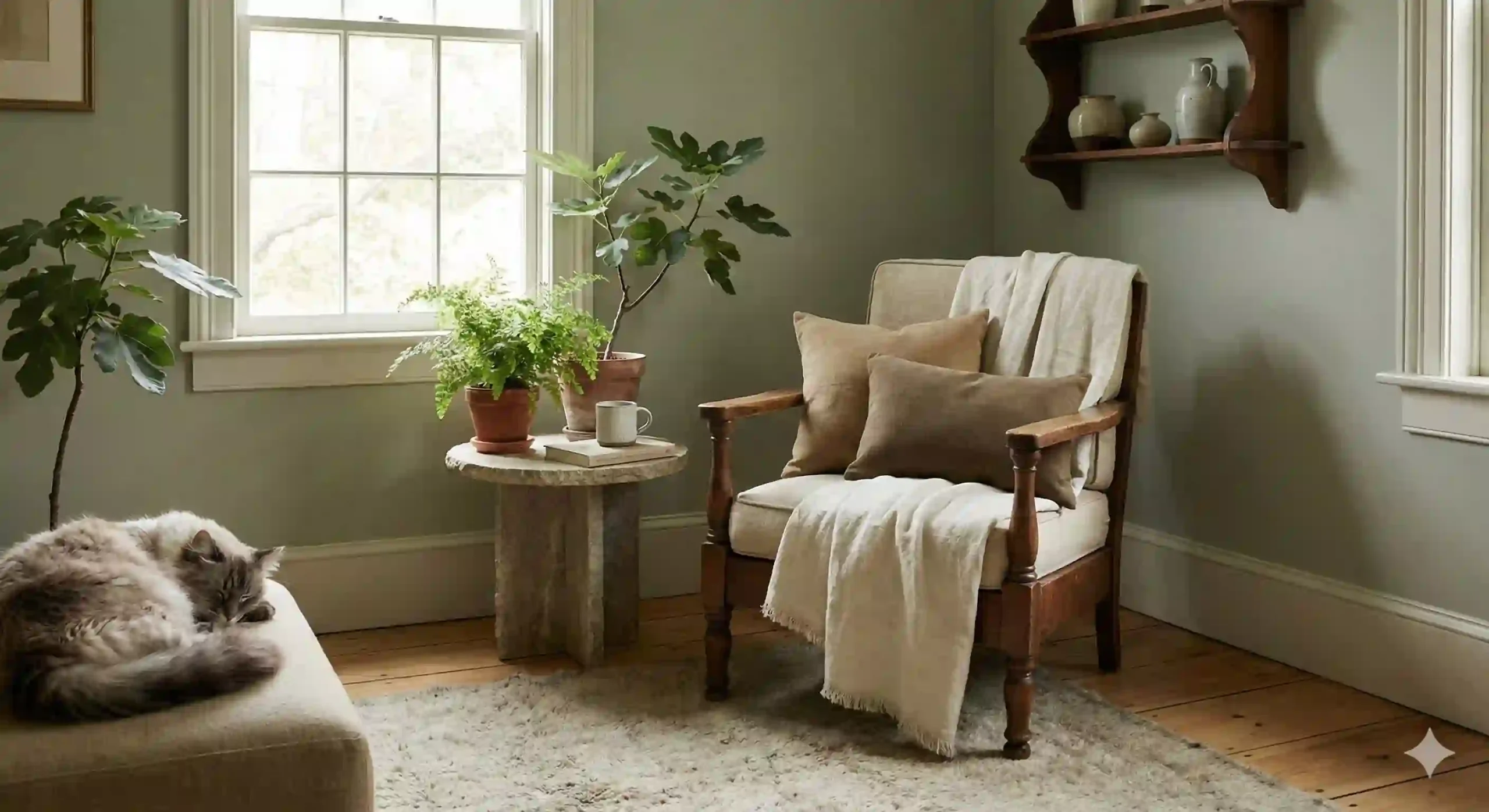
A few potted plants, a cozy corner with a comfortable armchair and a soft blanket, furry pillows, a softly purring cat, and a mug of a comfy drink. What more could anyone want after a hard day? Perhaps a nice little rain, the perfect background noise for relaxation.
A clean environment, which is not only practical but also soothes the eyes and thus the mind, is worth more than anything else to today’s working society. More and more people are striving to design and decorate their homes in the spirit of slow living, and interior designers are also doing their best to create just that.
Since we have become fans of slow living ourselves, we thought it was time to gather the experiences of interior designers that we have worked with and share them with you in the form of some useful tips. Find out below what the first and most important steps are for creating a slow living environment.
The power of decluttering
Let’s admit it, many of us cling to that worn museum ticket or faded train ticket that brings back our fondest memories. Regardless, we tend to hold on to items that would perhaps make life easier for everyone if we let them go.
Too many possessions place an excessive mental load on us, as more and more experts are now pointing out. At the same time, this phenomenon is certainly easily recognized by anyone who clings to certain objects more than necessary.
If there are fewer things around the house, the mind is able to breathe more freely, not to mention that we can create much more aesthetically pleasing interiors.
Decluttering has enormous power. You have probably experienced the feeling of satisfaction, lightness, and cleanliness that comes with decluttering a drawer. Imagine this pleasant, light feeling when you declutter your entire house.
It’s a lot of work, no doubt, but it’s definitely worth considering.
Pay attention to the colors you are using
The colors that surround us every day play a very important role in our health and general well-being. That is why one of the most important principles of slow living is to use colors that radiate calm, without being overwhelming or tiring.
The best choice may be to select from earthy tones and combine neutral and soft green colors for your interior.
More and more experts are now involved in color therapy, which is not surprising, and it is certainly becoming increasingly popular. The use of natural colors is definitely a fundamental step in slow living interior design.
Use stone, wood, linen
Certain materials, just like colors, radiate calmness while creating a natural feel. If you have the opportunity, look for unique pieces of furniture and decorative elements that radiate personality and a natural touch.
It is worth furnishing your home with antique or antique-looking pieces that are not only useful but also create a natural, calm atmosphere. These include materials such as stone, wood, and linen.
These three basic materials are not only noteworthy for their colors and feel, or their comfort and high quality, but also because they could actually have a positive effect on our health.
Linen in curtains and bedding helps regulate humidity in the home, while wood and stone are natural materials that, unlike synthetic materials, are less prone to accumulating dust or various allergens.
Create space for natural light
We are not just talking about moving to a NYC home with lots of large windows, but also about paying sufficient attention to natural light and making use of it. We come back to the same point again: one of the particular strengths of slow living is its beneficial effect on health.
The use of natural light also serves this purpose, as the more we rely on it, the more our circadian rhythm can improve.
By putting natural light in the spotlight, sleep can become more restful, and we are able to spend our free time in a more relaxing environment altogether.
Get vintage and antique furniture
Slow living is not only a balanced lifestyle, but also promotes sustainability. That is why it is worth choosing furniture that is not only useful, but also restored or upcycled.
If you renovate an old piece of furniture, you have already done a lot for sustainability. If you like unique and beautiful furniture but are not so keen on DIY and second-hand goods, you should definitely aim for high quality when buying new furniture or choosing antique pieces.
In the case of antiques, it is worth paying extra attention to transportation, as furniture that is several decades old may have different requirements and be more difficult to handle. In such cases, it is worth requesting white glove furniture delivery service in NYC.
Whatever you decide, always seek quality and sustainability, that’s how you can truly become a member of the slow living fan club.
+ 1 Tip: Stretch slow living to your backyard
Nature is a central element of slow living, reflected in the prominent role of earthy tones, natural materials, and natural light. It is therefore clear that when it comes to the outdoors, you should also focus on creating this island of calm when furnishing your home.
Forget about flashy colors, garden gnomes, and plastic flamingos. Unleash the power of nature, let the vegetation grow a little, do its thing, and find its happy place in your garden.
Get a comfortable bench or deck chair, maybe a bird bath, and let nature feel at home at your place.